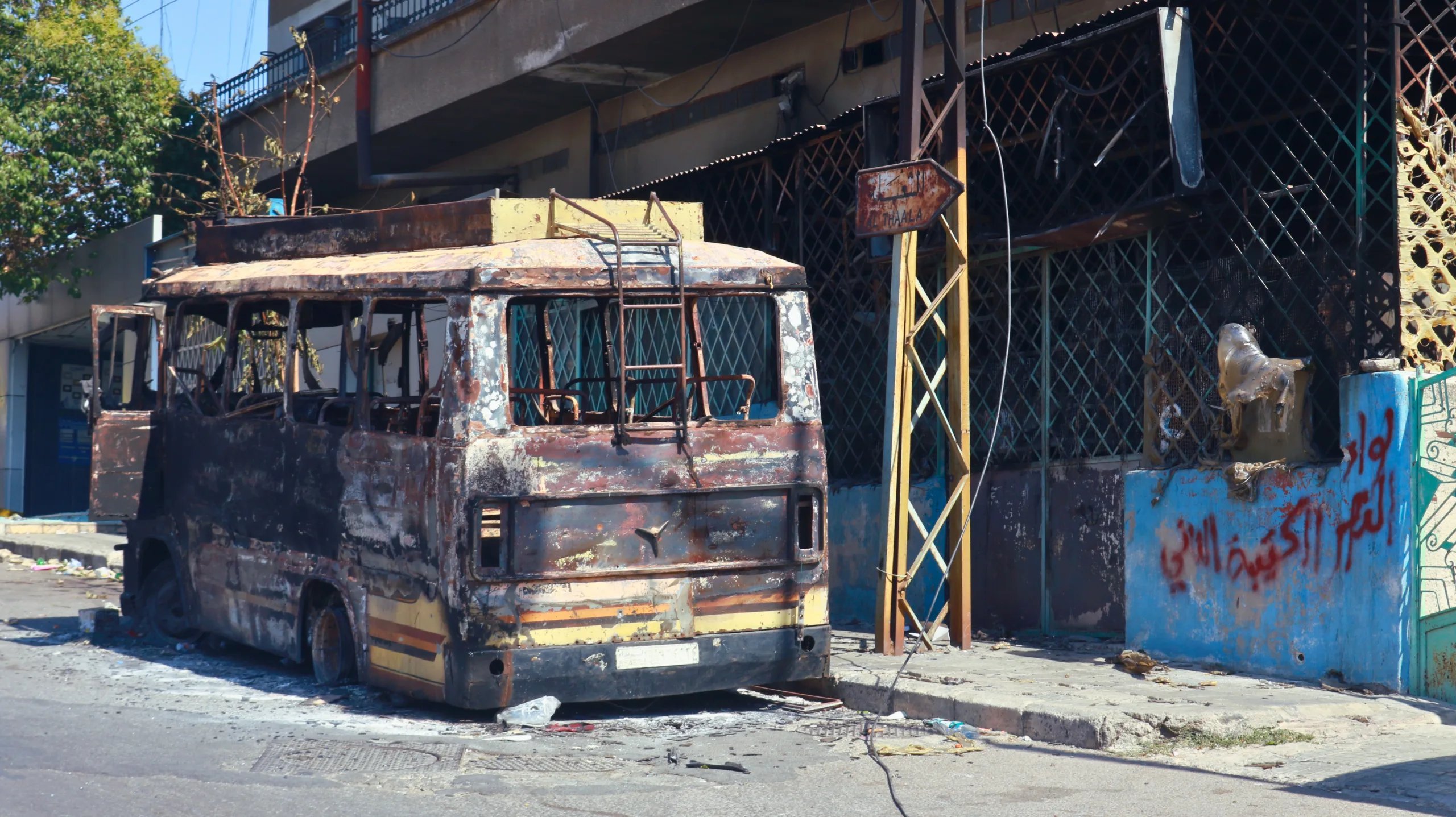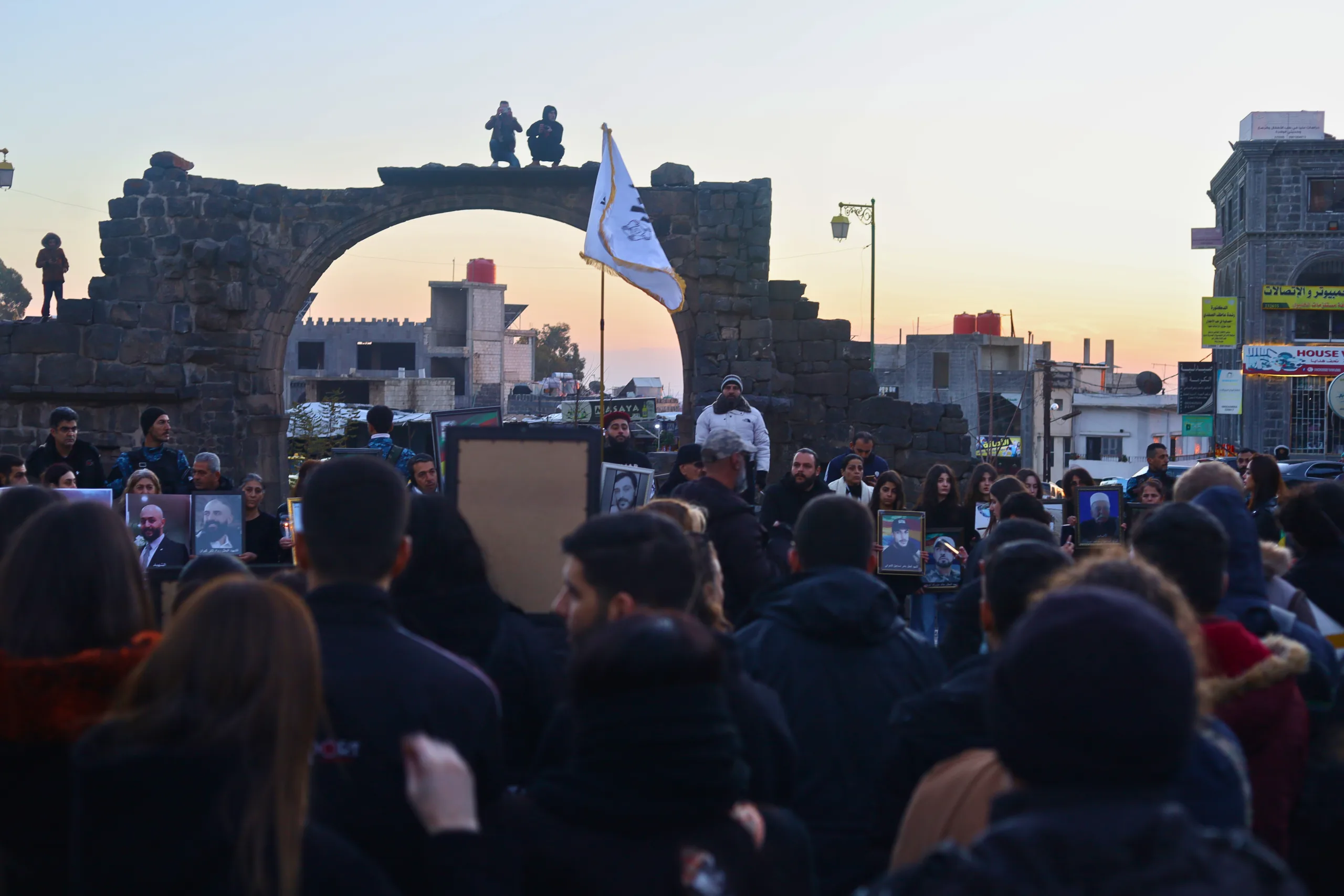
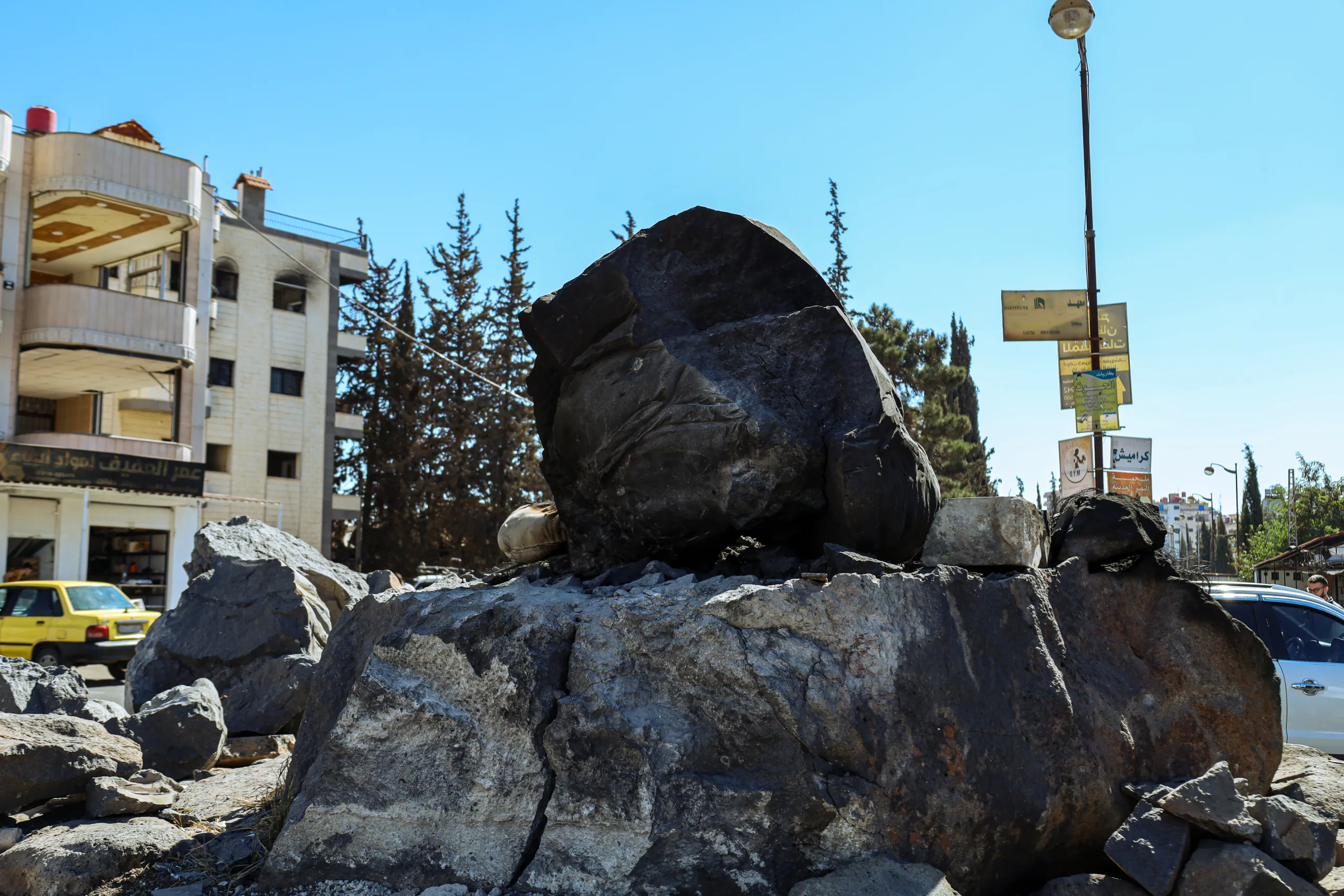
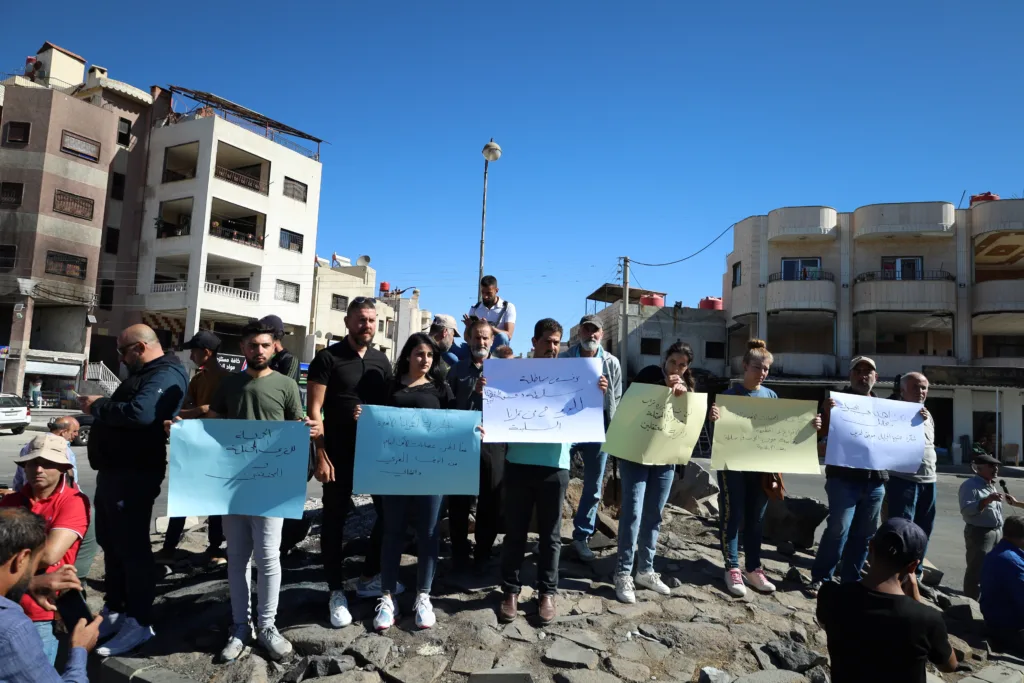
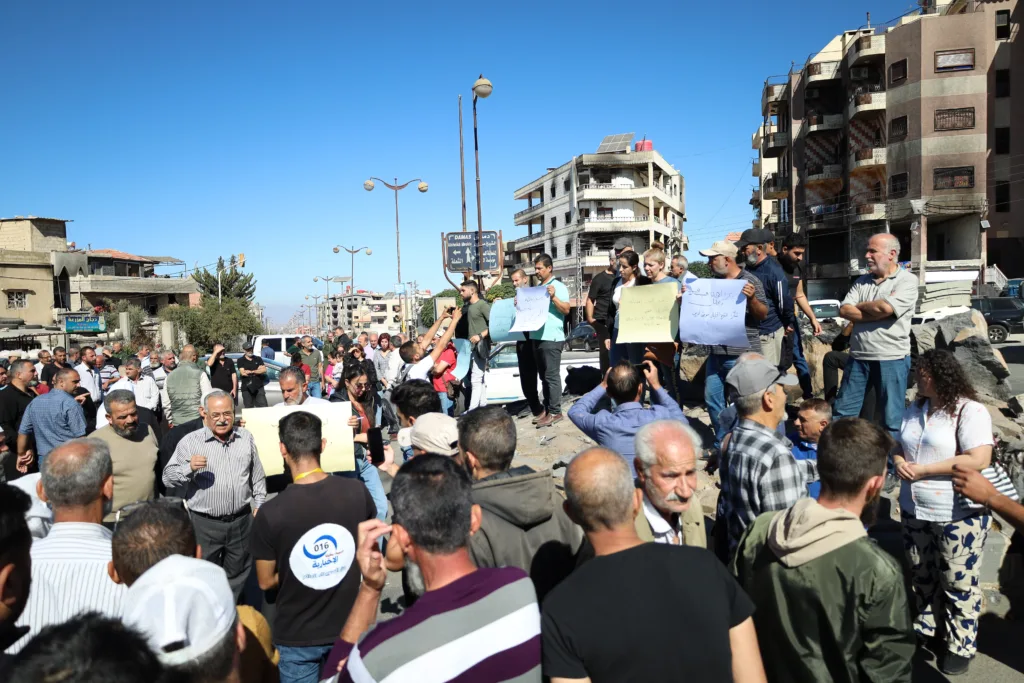
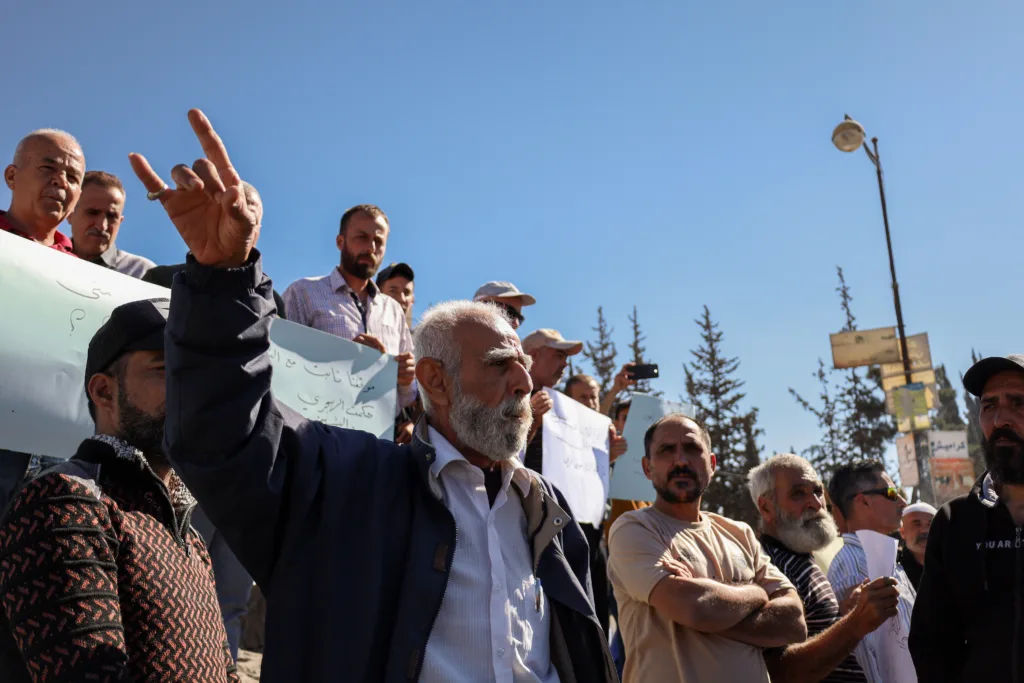
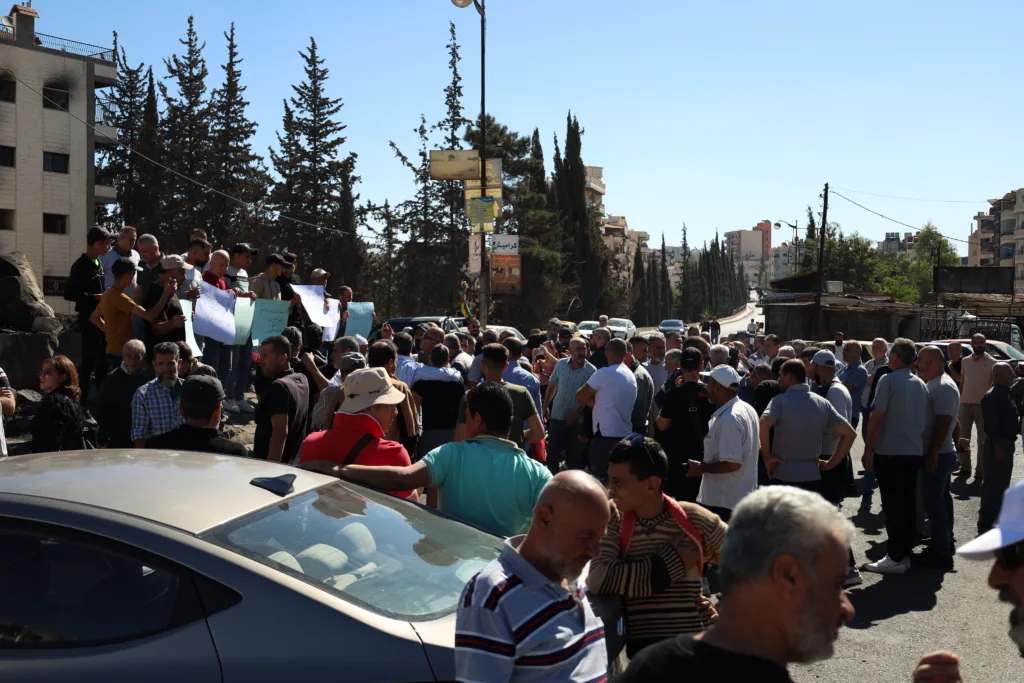
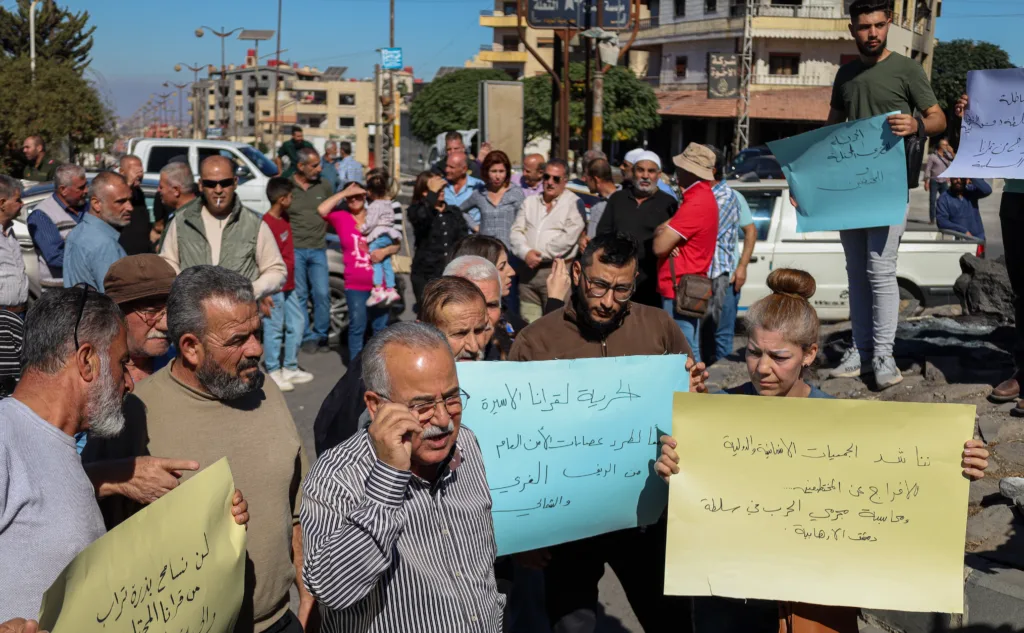
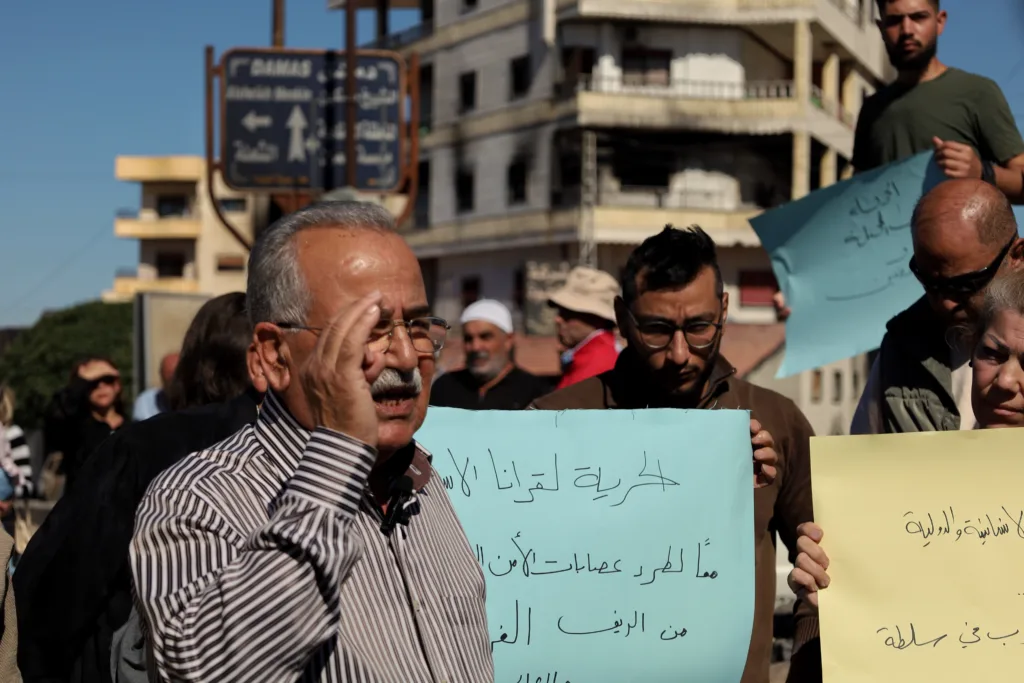
A large demonstration erupted on Wednesday, October 15, 2025, at Al-Omran Roundabout, a central junction in Sweida that was heavily damaged during the sectarian assault on the city last July. Many displaced residents from the affected villages gathered to demand urgent action for the recovery of their homes and lands.
The wave of violence that shook Sweida began in mid-July 2025, when armed groups launched coordinated attacks on villages across the governorate and its outskirts. Over several days, these groups swept through dozens of rural communities, destroying homes, killing civilians, and forcing others to flee. The governorate’s capital itself came under artillery fire and ground incursions, leaving extensive destruction in parts of the city.
By the end of July, tens of thousands had been displaced, and entire villages became inaccessible as Public Security Forces of the Syrian Transitional Government and affiliated armed units seized control of strategic areas surrounding the city. Humanitarian organizations reported severe shortages of food, water, and shelter, compounding the suffering of those forced into temporary accommodation.
Most displaced families now live in schools, shelters, or cramped apartments within Sweida city, cut off from their livelihoods and left with no resources. Families once dependent on agriculture and herding now survive on aid, while children face disrupted schooling and an uncertain future.
Around 35 villages on the outskirts of Sweida remain unreachable, controlled by armed groups linked to the Public Security apparatus. Residents say these forces are using the area as military zones and forward positions. From these sites, daily breaches and incursions into the city continue to be reported.
Communities that once thrived are now empty, transformed into military outposts that weigh heavily on the lives of those who fled. According to United Nations estimates issued in August 2025, the July offensive displaced between 93,000 and 187,000 people from Sweida and its countryside. The Syrian Observatory for Human Rights and regional media outlets report that around 35 villages in the northwestern and western outskirts remain inaccessible. Local monitoring groups offer figures between 32 and 36 villages, with 35 being the most widely accepted estimate.
These numbers reveal the scale of the crisis: tens of thousands displaced, dozens of villages emptied, and the fate of countless homes and communities still unknown. Children remain out of school; families endure psychological trauma from the attacks and the loss of property, all worsened by the constant threat of new incursions into the city.
For many, the future remains uncertain, as ongoing security fears and continued control of their villages make return seem out of reach.
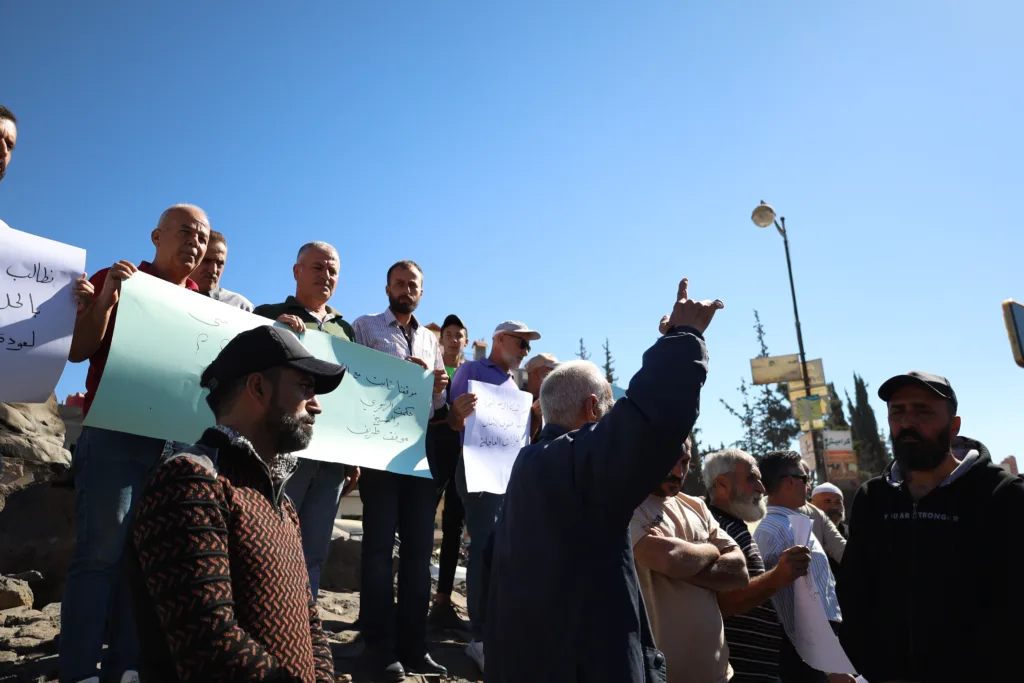
The demonstrators carried their anger and grief into the streets, demanding that local authorities and relevant bodies take immediate action to reclaim their villages and secure safe passage home. One protester said:
“We live as strangers in our own city. Our homes are only a few kilometers away, but reaching them is impossible. We have no income, no stability, and we don’t even know if our houses are still standing.”
The protest at Al-Omran Roundabout sent a clear message: the current situation is unbearable, and the surrounding silence only deepens despair. Protesters warned that each day of delay in reclaiming their villages pushes them further into hopelessness and undermines any chance of rebuilding their shattered communities.
Sweida has endured repeated cycles of violence over the past two years, but this week’s demonstration revealed a new and urgent struggle, not just for security, but for the right to return and the right to justice. As chants echoed through the exhausted square, one question lingered in everyone’s mind: