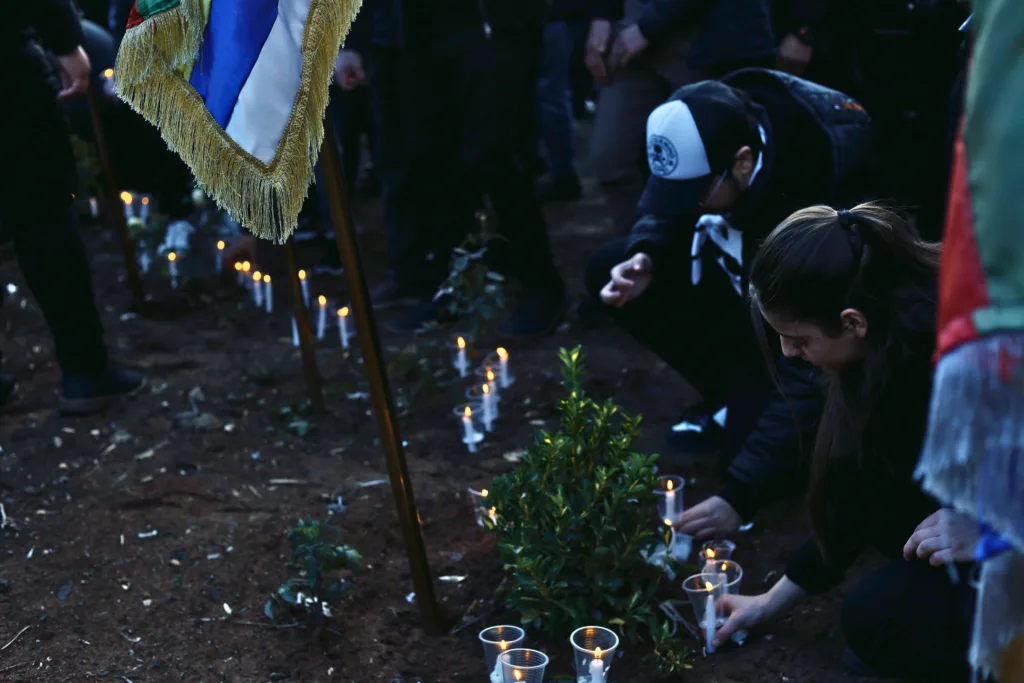
As the year turned elsewhere, residents of As-Sweida in southern Syria marked the night in silence, gathering for a candlelight vigil that reflected the city’s unresolved grief after the mass killings of 2025.
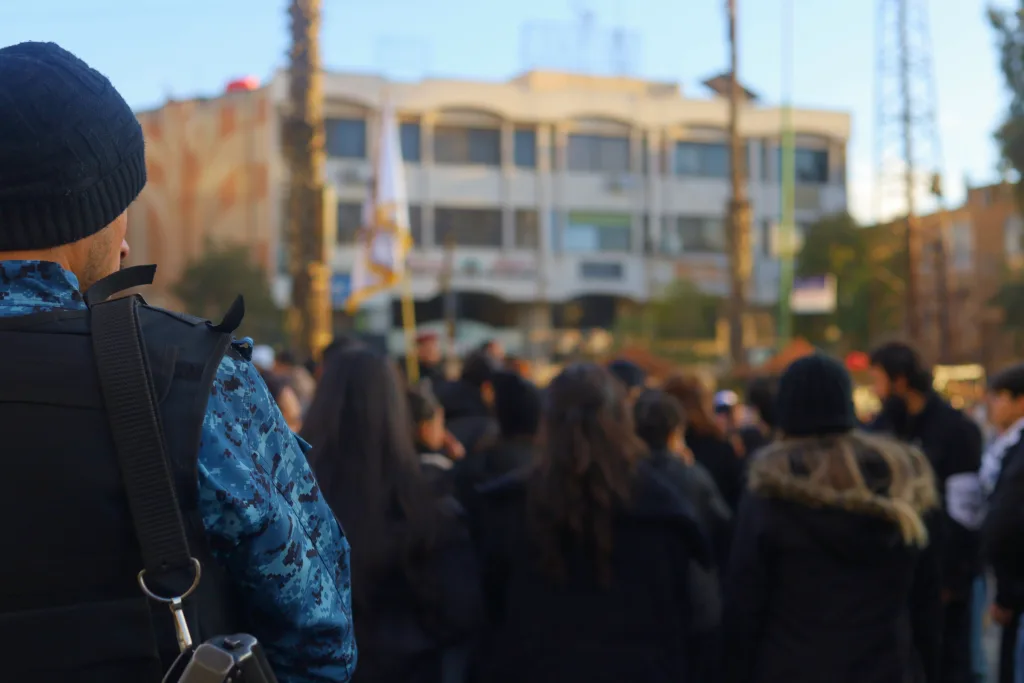
On the eve of the New Year, the streets of As-Sweida were quiet. Fog settled over the city, the cold sharpened, and there were no signs of celebration: no countdowns, no music, no gatherings marking the passage of time. People walked through the streets as they always do, but with a shared awareness that this night would not be marked by joy.


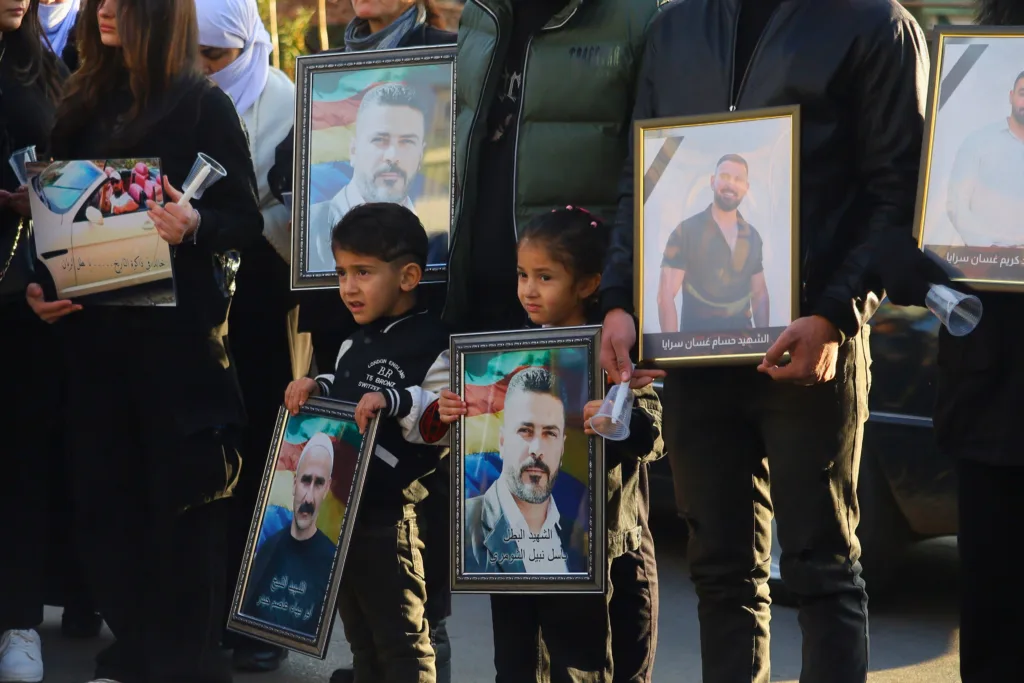

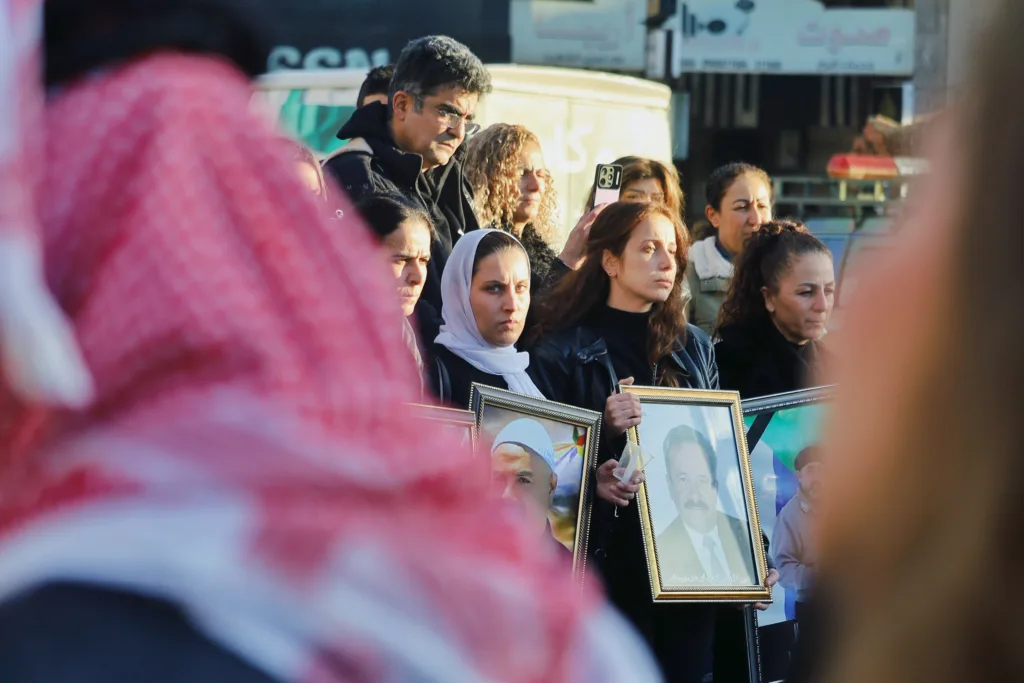
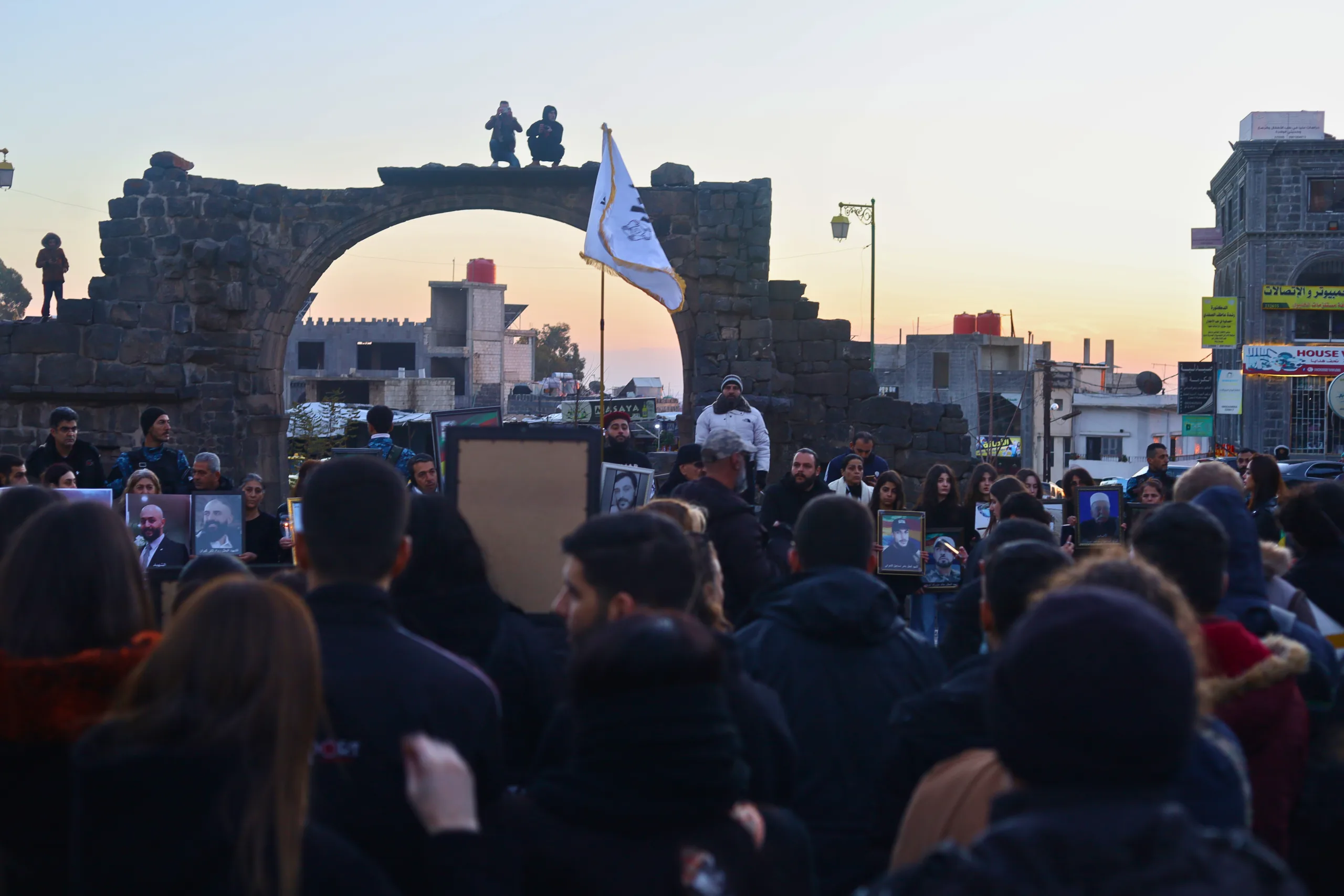
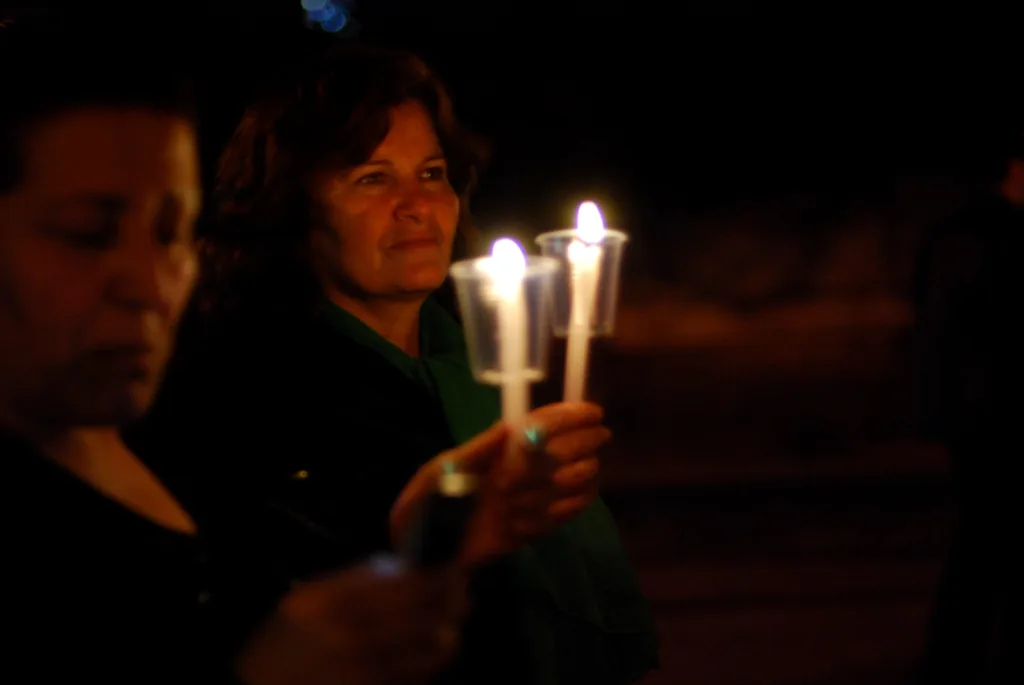
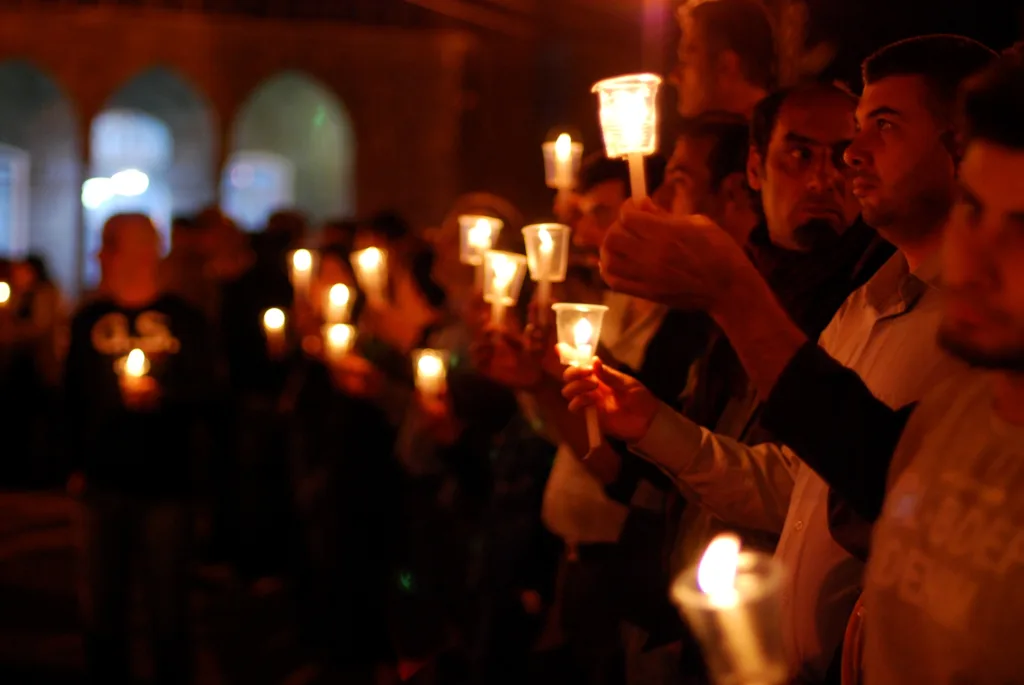
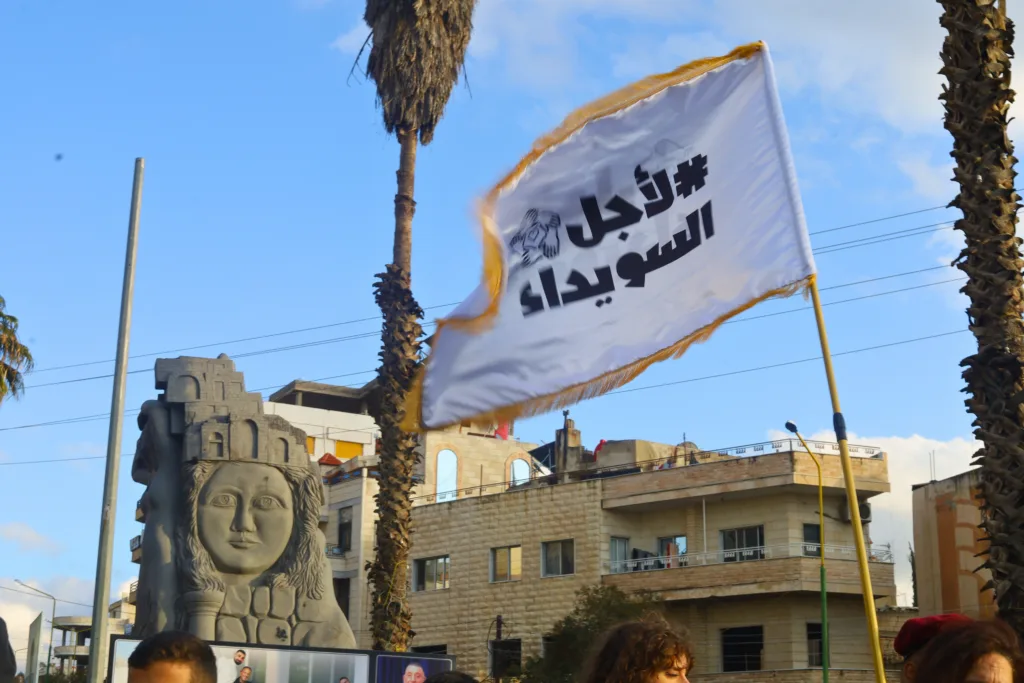
Instead, families of the martyrs gathered for a candlelight vigil, holding photographs of their loved ones in one hand and candles in the other. The vigil marched through the market, starting from Tishreen Roundabout, now known as Al-Saraya Roundabout. The procession was slow and deliberate, carrying not only personal grief but a collective one that had become familiar in the city.
Candlelight vigils in As Sweida continue as the local way of showing respect and solidarity for people in grief, and a symbol of resistance against aggression and injustice. In March 2011, as protests spread across Daraa and many civilian protesters were killed in protests, residents of the city held a public stand to honor those victims in Daraa, marking one of the earliest collective acts of peaceful opposition during that period. This act of acknowledging death has always been a unique and strong social identity in Sweida, through quiet gathering, and yet remained part of how the community responds to loss and grief. The New Year’s Eve vigil followed this same trace of silence, grief, linking past and present through a shared language of mourning that continues to surface whenever the city is confronted with grief.
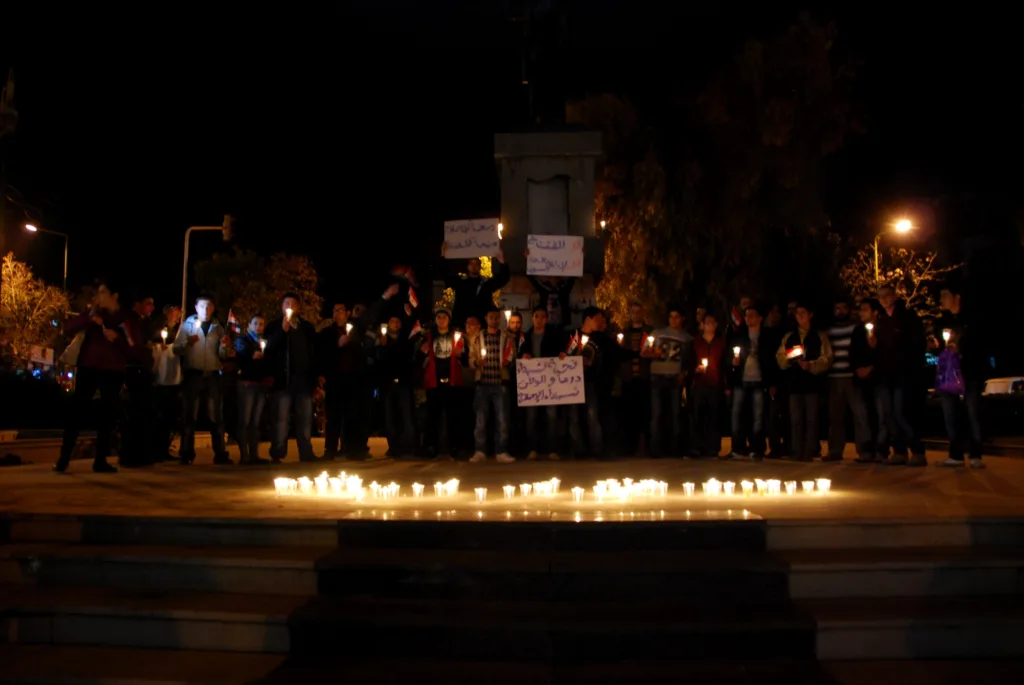
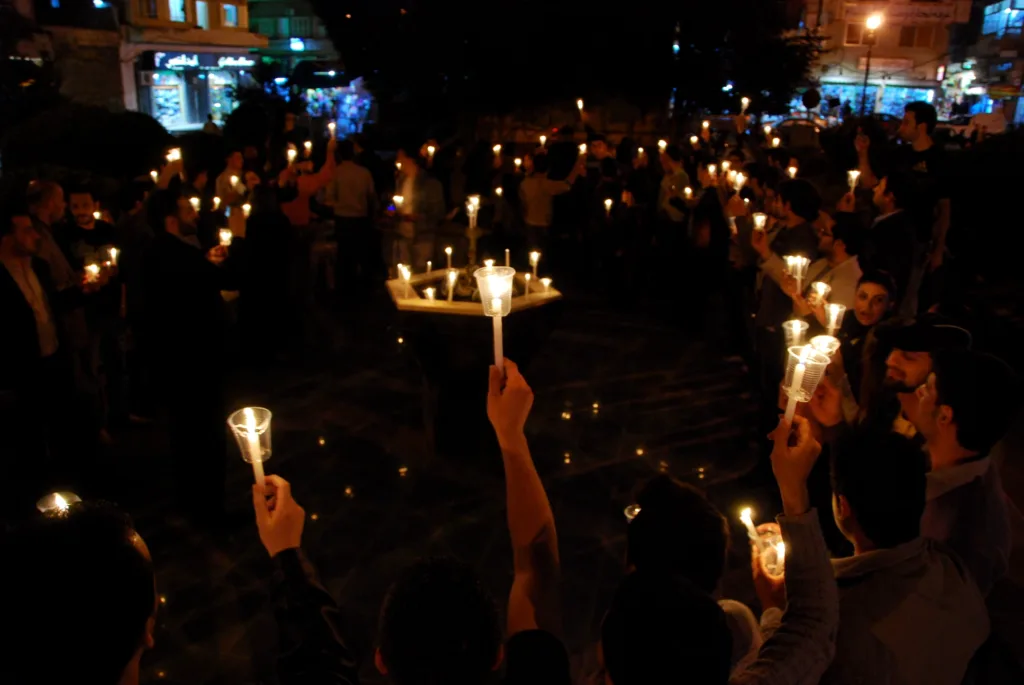
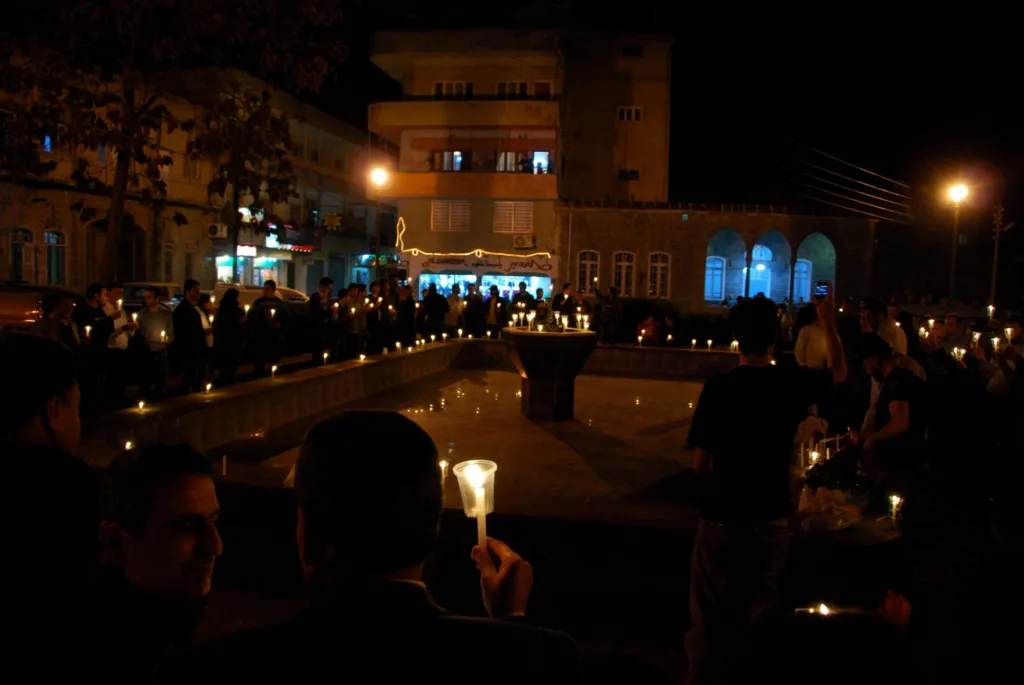
Al Saraya Roundabout, formerly Tishreen Roundabout, carries a heavy symbolic weight in As Sweida. In 2025, it became the site of a killing that targeted members of a well-known local family, an incident that has since come to represent the depth of loss experienced by the community.
The vigil was organized by filmmaker and producer Qusai Alessami, through an initiative under the name “For As-Sweida.” Voices of the audience loudened in grief to pay respect to the martyrs, as the group moved forward. No names were read. There was no need to explain who was being mourned. The presence of the families, the photographs, and the candles spoke clearly enough.
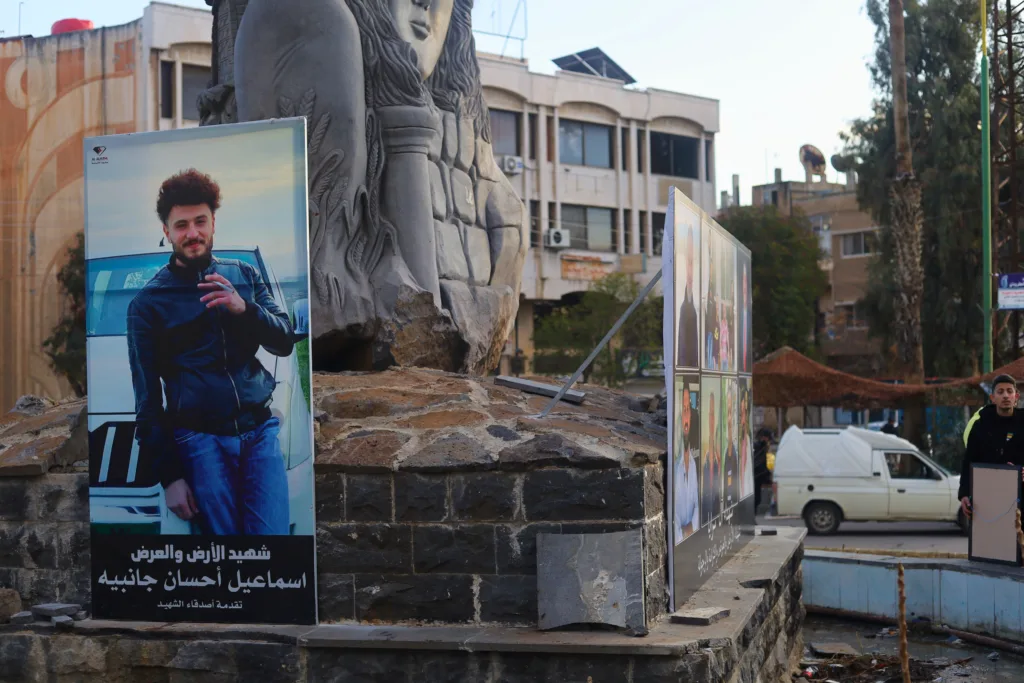
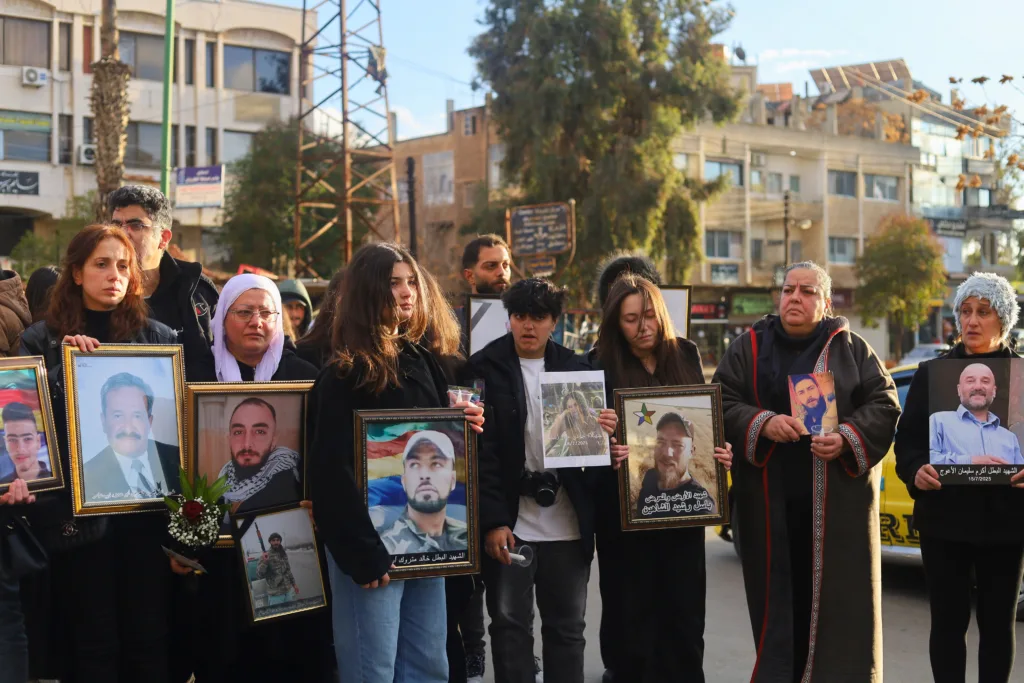
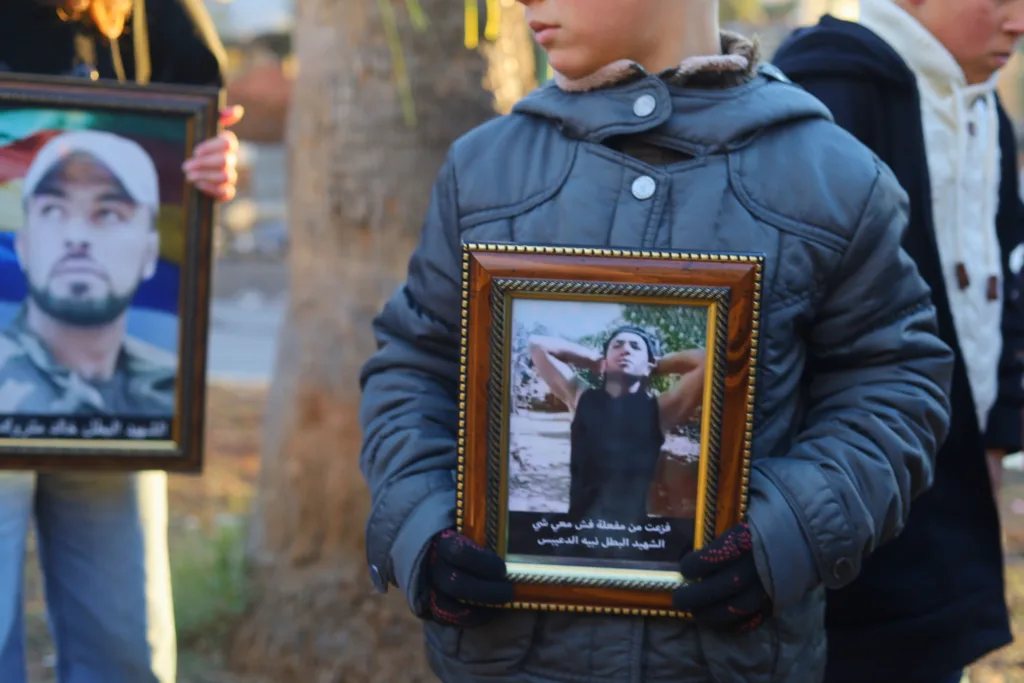
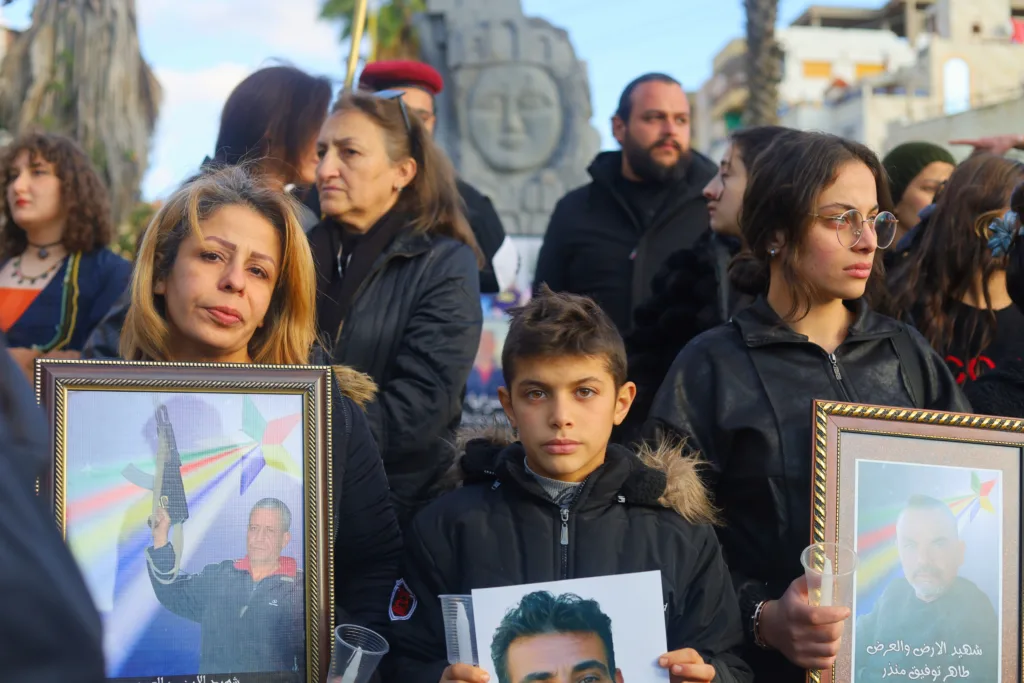
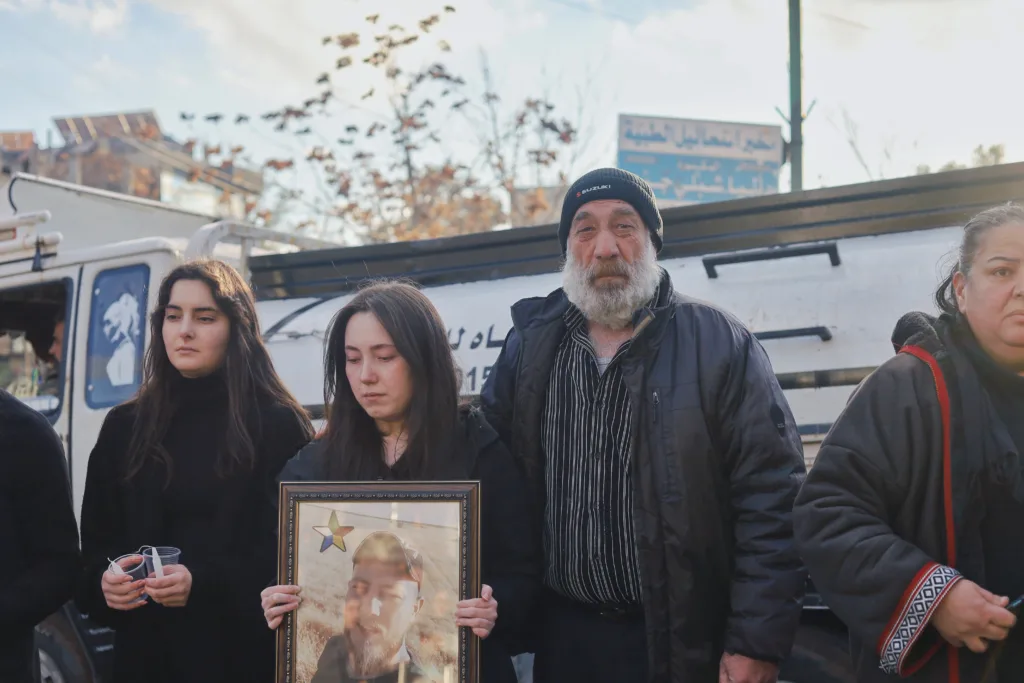
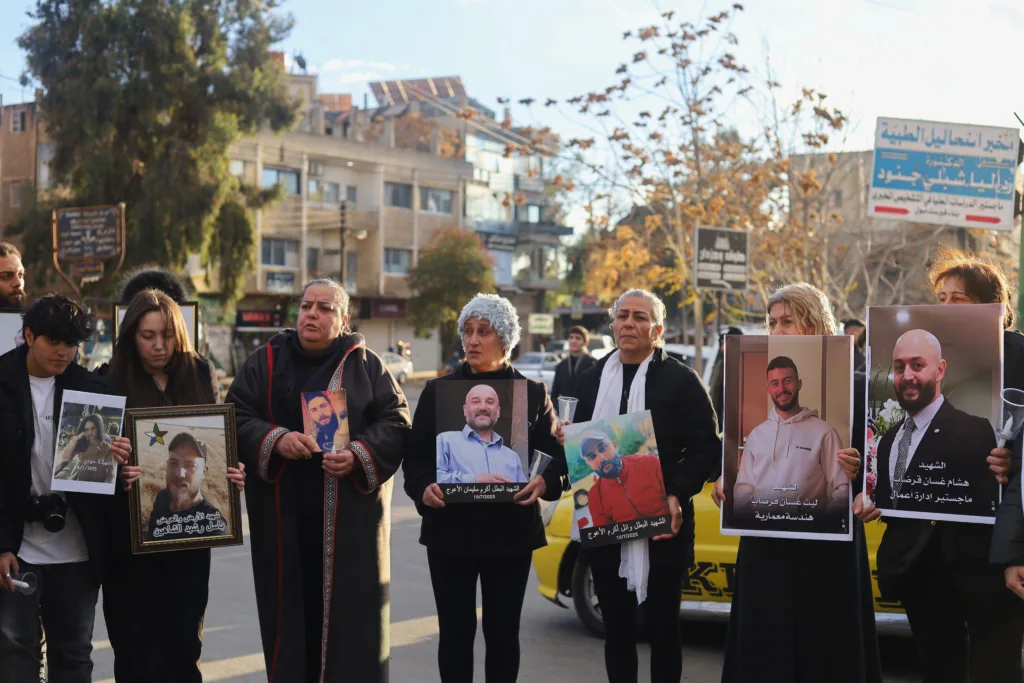
The martyrs of the July 2025 events remain central to the city’s memory. Their absence continues to shape daily life, long after the immediate shock of loss has passed. For many in As-Sweida, public celebrations have felt distant since then, replaced by a quieter reckoning with what has been taken and what remains unresolved.
While other Syrian cities elsewhere welcomed a new year with noise and light, As-Sweida marked the night differently. Time did not feel as though it had turned. It paused. The year changed on calendars, but in the streets, the city stood still, holding its grief together, not as a gesture, but as a reality that continues into the days ahead.