On a July that never left the scene, only changed its shape
Some phases end when the shooting stops. The noise fades, the urgent images recede, and people begin, slowly and heavily, to count what was lost and sort through what remains. But there are other phases that refuse to close so neatly. Days pass, headlines shift, cameras move on, yet something deeper remains open. The event no longer belongs to the past. It becomes a layer of aftereffect that keeps spreading through language, imagination, fear, and the way people look at the state, at their neighbors, and at the future itself. That is how July in Sweida now appears: not as a set of days that passed, but as a suspended time that keeps changing form without changing its essence.
When a statement is not enough
In the first days, everything seemed to move toward a familiar frame: violence erupted, people were killed, a ceasefire was announced, and promises of investigation were delivered in the calm tone of official language. On 22 July 2025, Syria’s Ministry of Defense said it was aware of reports of “shocking violations” in Sweida and pledged to identify those responsible and hold them accountable. That language suggested an attempt by the state to place boundaries around the chaos, to move what had happened from the realm of shock into the realm of procedure. But what happened was too heavy to be carried by a statement, and too vast to be contained by a promise. Some forms of violence may end on the ground, yet leave behind an entire period that does not end with them.
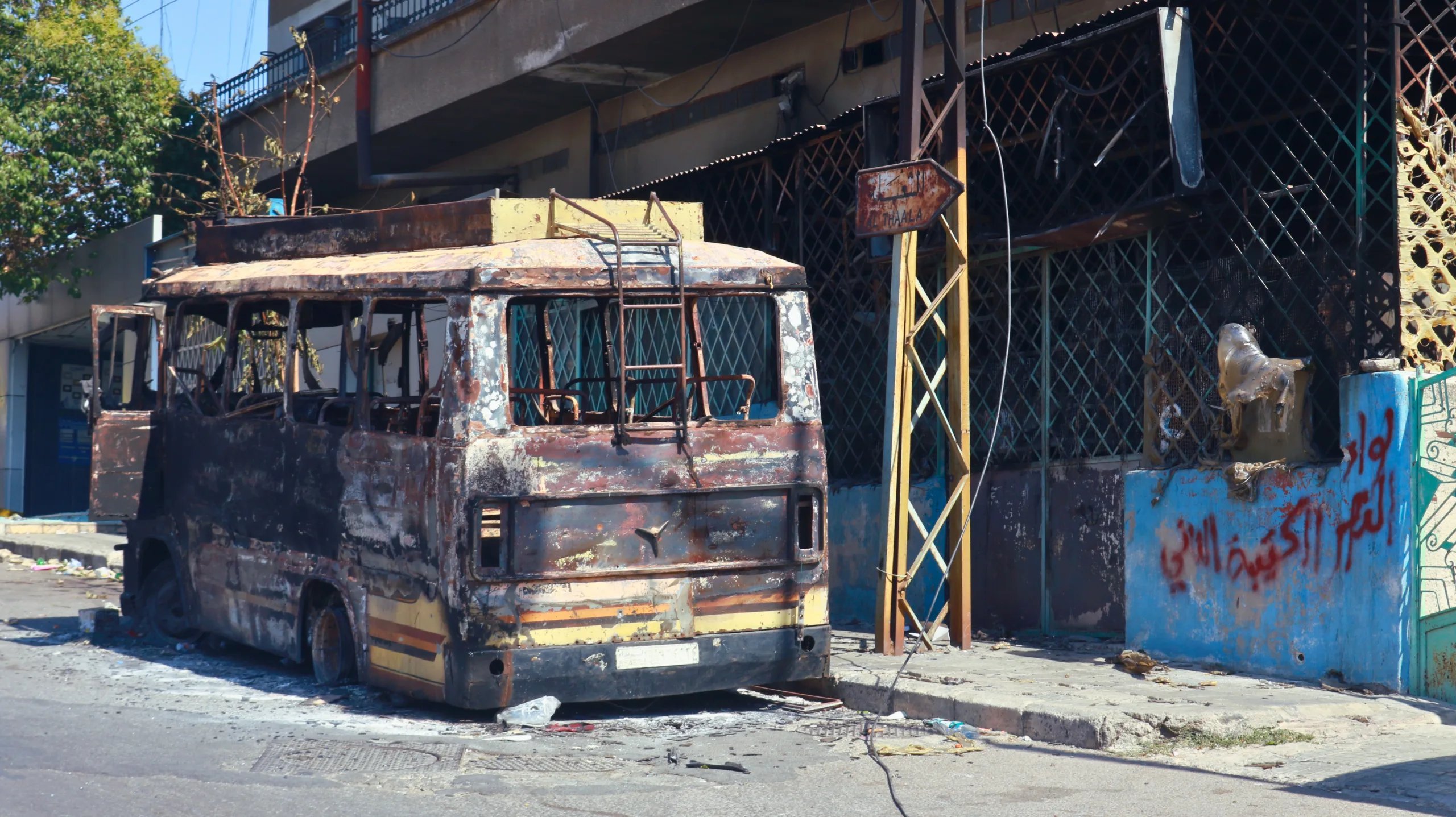
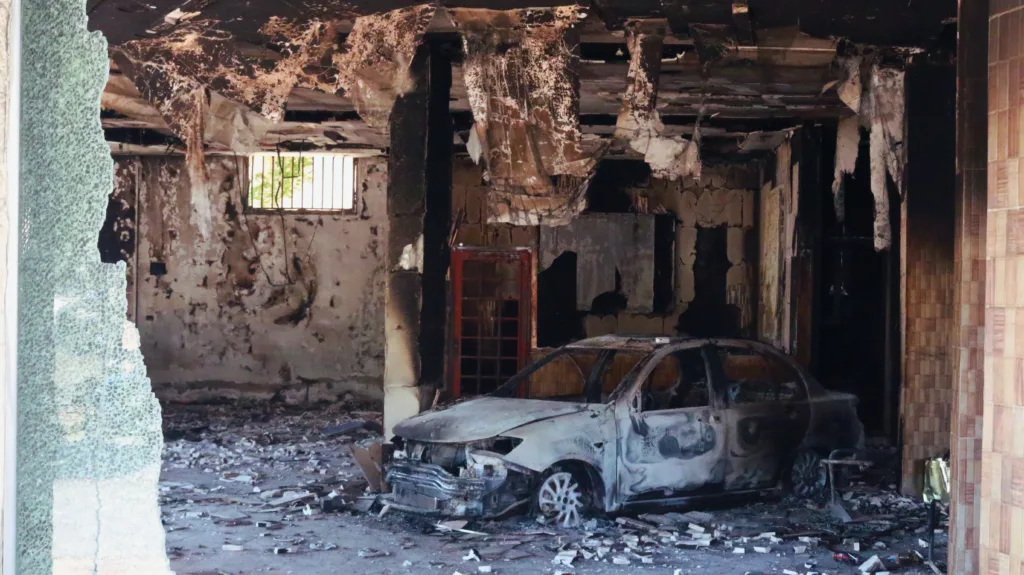
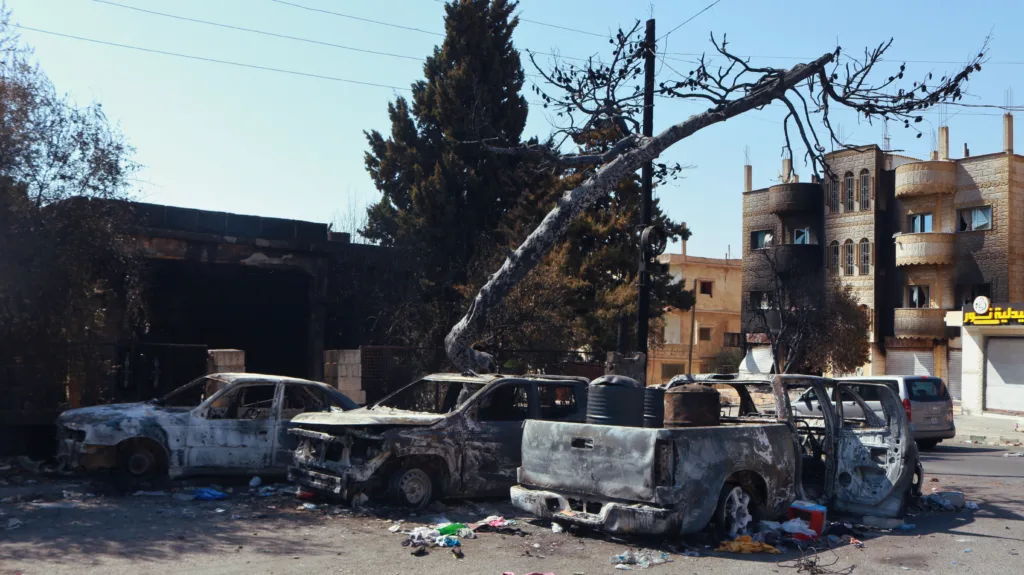
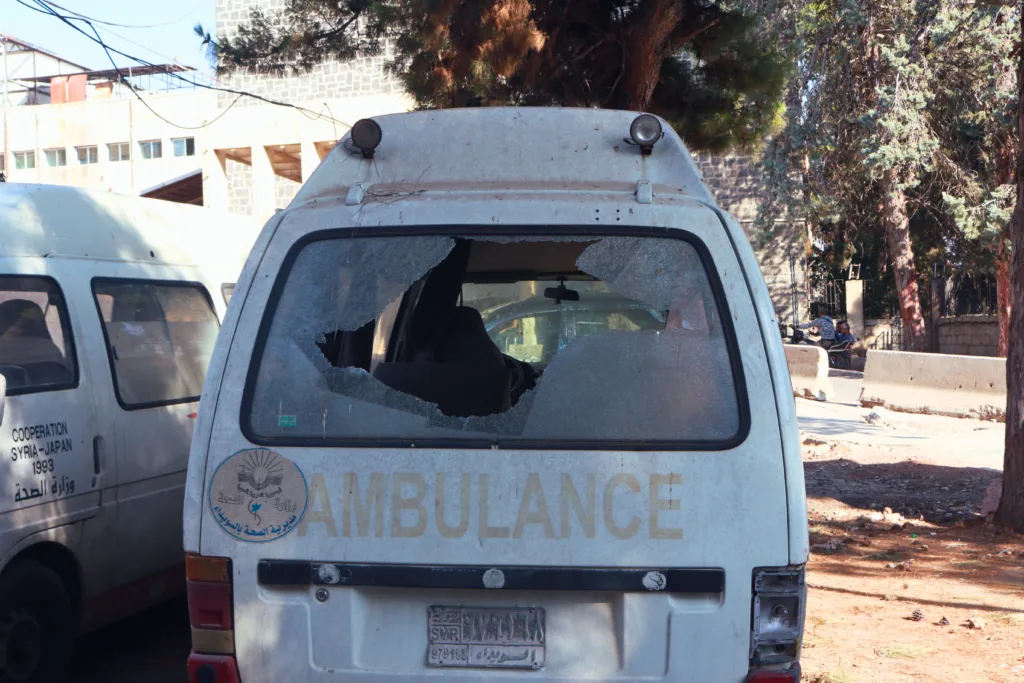
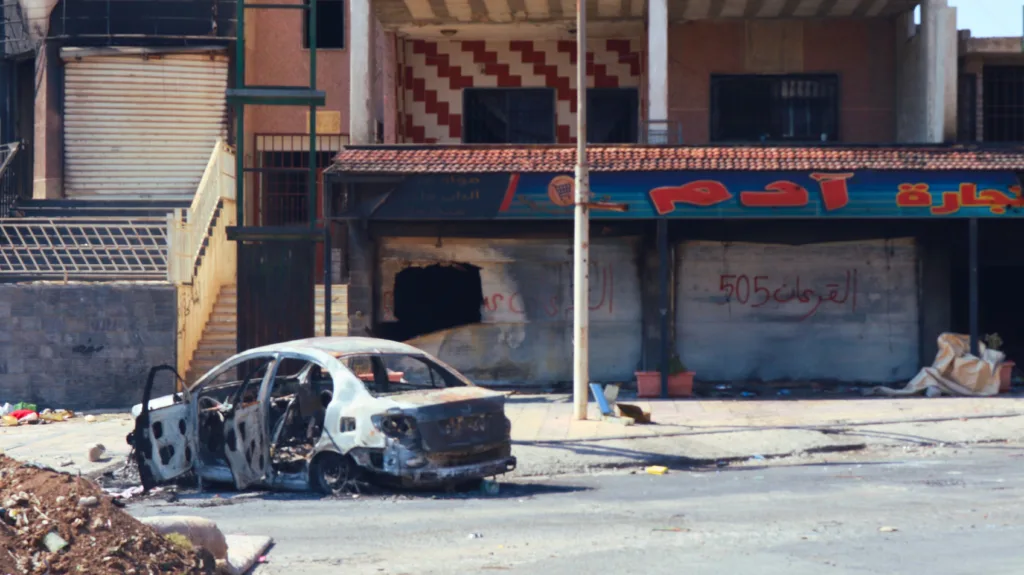
That is why July was never just another passing wave of violence. What remained afterward was not only a matter of numbers, however devastating those numbers were. It was something far more intimate and embedded in daily life: houses pierced by gunfire and then filled by silence, roads that no longer meant what they once did, and a broader sense of trust ruptured between the city and the state, between different communities, and between people and the very idea of safety. Once safety itself fractures, an event does not end when the shooting stops. It ends when the ordinary becomes ordinary again. And in cases like this, that return does not come quickly.
From grief to political language
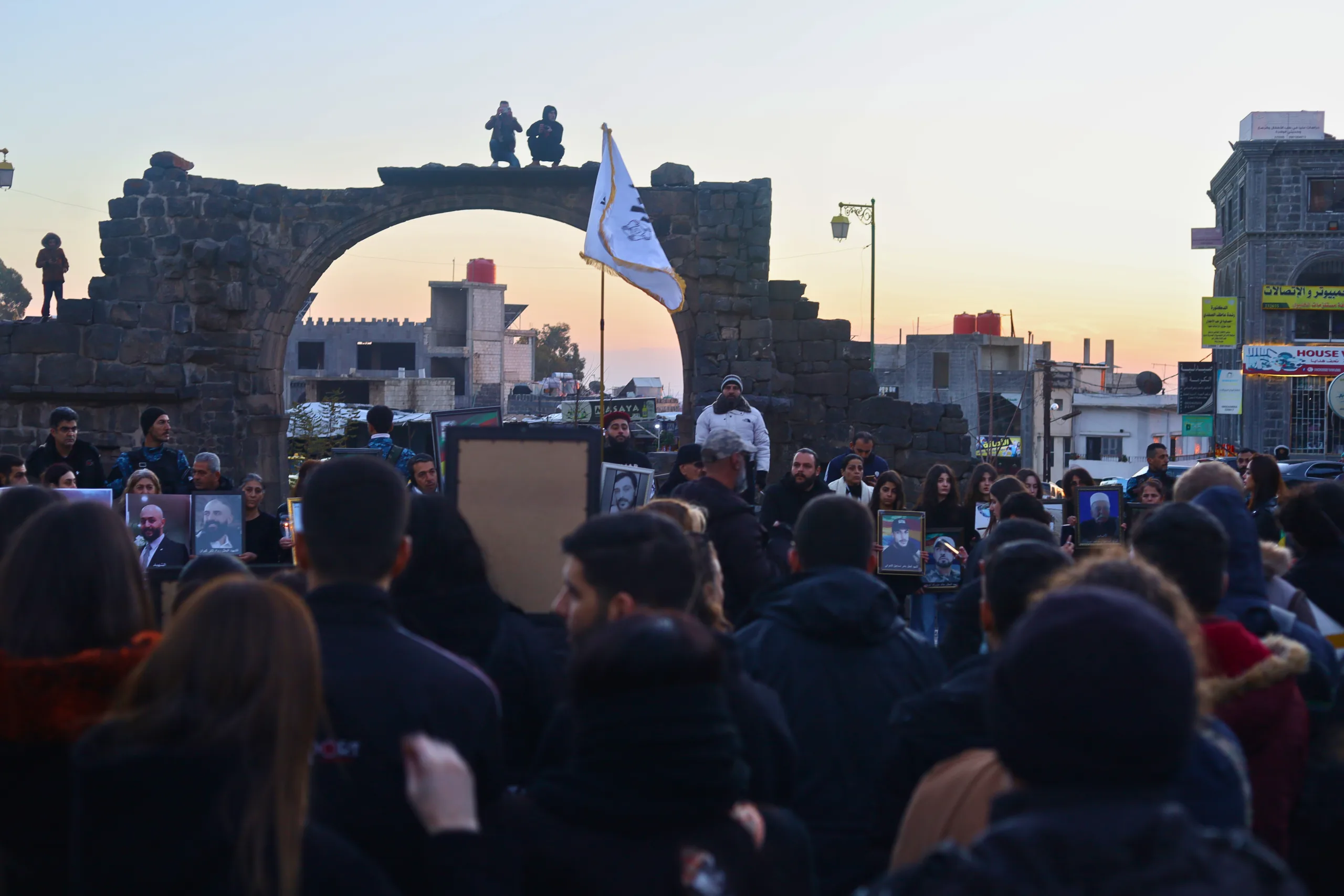
That shift soon became visible in politics as well. In August 2025, large demonstrations were held in Sweida, described as the biggest since the July confrontations, and for the first time so clearly raised the demand for Druze self-determination. This was not simply an extension of grief into protest. It was a sign that mourning itself had begun to change its language. What had been pain, loss, and disbelief only weeks earlier was taking the form of a harder, more uncompromising political discourse, one more distant from the older middle ground. When that happens, it becomes impossible to say the phase is over. It has merely moved from the battlefield into the political imagination.
Justice as an unfinished threshold
Then came the question of justice, confirming that the door remained only half closed. In January 2026, Human Rights Watch said accountability for abuses in Sweida remained insufficient, and that government forces, Bedouin groups, and Druze gunmen had all committed grave violations, including summary killings, serious abuses of personal dignity, abductions, and large-scale displacement. What makes such findings so weighty is not only that they document the scale of the violence, but that they point to something else as well: the truth itself has not yet settled into a form that allows society to place it behind them. When responsibility remains scattered across competing narratives, incomplete investigations, and pain that has not been met with justice, the past remains present, as though it has not yet agreed to become past at all.
March reopens the file
March 2026 added another layer to this picture. The Sweida file no longer stood only at the stage of demanding accountability. It entered a broader phase of documentation without entering a phase of closure. On 13 March, the UN Commission of Inquiry on Syria said its latest reporting addressed the need for justice and reform and noted the establishment of national investigative bodies into the violence of March and July 2025. It went further still, stating that more than 1,500 people had been killed in Sweida in mid-July, most of them Druze and Bedouin civilians, at the hands of government forces, Druze armed groups, and tribal fighters, and that a dedicated report on the violence in Sweida would be issued later this month. Even at the level of international investigation, then, the case does not appear closed. It is still unfolding under scrutiny.
A few days later, on 17 March 2026, the Syrian national commission submitted its final report. According to the state news agency, the commission documented heavy human losses, grave violations, and widespread displacement, and referred its findings to the judiciary while stressing accountability. Another report published by the same agency that day included more detailed figures on the dead and injured, and described violations ranging from intentional killing and looting to torture, property destruction, and sectarian incitement. Again, this does not mean the phase is over. It means the investigation itself has become part of the phase. When an event enters judicial and political archives without losing its ethical and social charge, we are no longer dealing with a closed chapter. Only the instruments through which it is managed have changed.
When the event returns in another form
Nor did July return only as memory. It returned as negotiation, security arrangements, detainees, and unresolved questions. In February 2026, the first prisoner exchange since the summer of 2025 took place between the Syrian government and Druze factions in Sweida, involving the release of 61 Druze detainees in exchange for 25 government personnel. This is not a marginal later development that can be placed safely in a footnote. It says, in its own cold way, that the previous summer has still not settled into its proper place. A phase that truly ends does not usually return through buses, exchanges, and doors opened in stages for detainees who should never have remained suspended between war and law in the first place.
What does it mean for a phase not to end?
At that point, the question becomes deeper than chronology. The issue is not simply when events began and when they stopped, but when they stop reshaping everything that comes after them. When do they cease to intervene in language, in trust, in the image of the state, in the meaning of coexistence, and in people’s ability to imagine a less fragile tomorrow?
Perhaps this is the particular cruelty of July in Sweida: it did not remain confined to its immediate timeframe. It spilled beyond it, distributing itself across the following months in the form of protests, rights reports, UN documentation, national inquiries, prisoner exchanges, and a persistent sense that the truth is still larger than the formulas being used to contain it.
The small details that remain
The phase that never ended is not only a political one. It also lives in the details that rarely enter major headlines: in the caution that has become part of everyday movement, in homes that never recovered their old meaning, in memory hardening each time justice is delayed, and in a future no longer seen as a natural continuation of life, but as something far more unstable and uncertain. Sometimes the end of a phase is not measured by an official statement, but by whether people recover trust in what used to feel ordinary. In many cases, that return still seems far away.
Embers beneath the ash
That is why the phrase “the phase that never really ended” is not merely literary. It is an exact description of a condition that remained open after July: in memory, in politics, in the courts, and in the meaning of shared life itself. July did not stay where it happened. It moved beyond its first days and spread across the months that followed, as though each month rewrote it in a new language without managing to bring it to a close.
Perhaps that is why the most important question is not when the events of July ended, but on what level they ended, and on what level they still continue. In justice? In return? In trust? In language? In the relationship between people? Some events burn out quickly. Others remain like embers beneath ash. They do not fill the whole horizon every day, but they never stop heating what lies around them.